
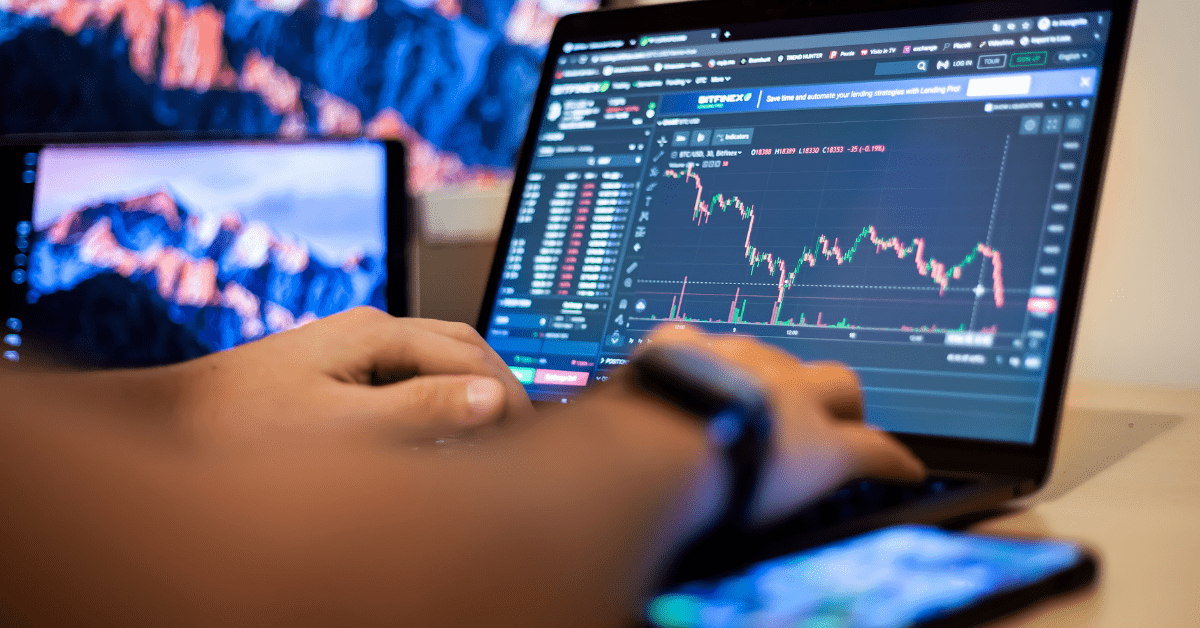
If you’ve ever made a forex trade and realized that as soon as your order is filled, you’re already in the red by a few pips, then you’ve already seen the spread in action. While the spread is just one more cost of doing business for the retail trader, it can be the difference between success and failure for the trader at the prop firm.
Knowing how the spread works and how to calculate spread in forex precisely isn’t just the kind of knowledge that can impress your friends with its sheer geekiness—it can actually make you money.
What Exactly Is the Spread?
In forex, every currency pair has two prices:
- Bid price — the price at which you can sell
- Ask price — the price at which you can buy
The spread is just the difference between these two values.
The spread is the broker’s fee, built right into the prices.
Instead of paying a commission, the broker makes money on the spread.
Example:
EUR/USD Bid: 1.1050
EUR/USD Ask: 1.1052
Spread = 0.0002 = 2 pips
This is the distance the market has to move in your favor just to break even.
Why Spreads Matter More in Prop Firm Trading
Prop trading firms have some very tight rules that are generally applied:
- Maximum daily drawdown
- Overall maximum loss
- Profit targets within a certain timeframe
- Trading news, as well as trading during the overnight session
When trading under these rules, the spread quickly begins to add up.
A higher spread means:
- A bigger initial loss per trade
- A lower risk-to-reward ratio
- More difficult time scalping
- More risk of slippage during times of high market volatility
When taking dozens of trades during a challenge, even an additional half pip per trade can make a big difference.
How to Calculate Spread in Pips
Most forex platforms (including those used by prop firms) display prices to four or five decimal places.
For pairs priced to four decimals (e.g., EUR/USD):
Spread (pips) = Ask price − Bid price × 10,000
Example:
Ask: 1.1052
Bid: 1.1050
1.1052 − 1.1050 = 0.0002
0.0002 × 10,000 = 2 pips
For JPY pairs (two decimal places):
Spread (pips) = Ask − Bid × 100
Example:
USD/JPY Ask: 150.25
USD/JPY Bid: 150.23
Difference = 0.02
0.02 × 100 = 2 pips
How to Calculate Spread Cost in Money
Knowing the pip spread is helpful. Knowing what it costs in actual dollars is even better.
Formula:
Spread cost = Spread (pips) × Pip value × Lot size
For a standard lot on EUR/USD:
- 1 pip ≈ $10
So if the spread is 2 pips:
2 pips × $10 = $20 cost per trade
Close ten such trades, and you’ve paid $200 before commissions.
For traders in a prop firm, seeking to limit their drawdown, this is no trivial amount.
Variable vs Fixed Spreads
Spreads are not all created equal.
Fixed Spreads
Remain relatively constant in most markets
Easier to calculate costs
Are slightly wider in general
Variable (Floating) Spreads
Are affected by the markets
Are generally tighter in quiet markets
Can explode in times of news or low liquidity
Most environments for traders in a prop firm are raw or variable spreads, depending on the liquidity providers.
When Spreads Widen the Most
Even if a broker has low spreads, they’re not low all the time.
Spreads will widen in:
- Major news announcements
- Market open and close
- Low liquidity sessions
- Unexpected volatility in the markets
- Holidays
This is why many environments for traders in a prop firm prohibit trading on news announcements. It protects both the firm and the trader from wild price movements and large spreads.
The Role of Low Spread Brokers
Selecting a brokerage with tight spreads can make a significant difference in the long run.
Low spread accounts are particularly relevant to the following strategies:
Scalping
High-frequency trading
Intraday trading
Small stop-loss systems
Challenge phases with tight targets
Even swing traders benefit from this because every trade still incurs the spread.
This is the reason many traders are interested in learning more about how to calculate the spread in forex and low spread forex brokers.
Raw Spread Accounts vs Standard Accounts
Most brokers provide the following two options:
Standard accounts
No commission
Higher spreads
Simpler accounts
Raw or ECN accounts
Very tight spreads or even zero spreads
Separate commission charged on each trade
Best suited for professionals
At first glance, zero spread accounts look like the best choice—but always look at the commission as well because the total cost can be similar or even higher.
It is the total cost that matters, not just the spread itself.
How Prop Firms Structure Trading Costs
Prop firms don’t always operate like retail brokers. Some:
- Provide institutional liquidity
- Simulate trading environments
- Add internal risk filters
- Mirror real market spreads
During evaluation phases, spreads may even be slightly wider to discourage reckless scalping.
Always review:
- Average spreads for major pairs
- Commission structure
- Execution speed
- Slippage policies
Fast execution with a slightly higher spread can sometimes be better than ultra‑tight spreads with poor fills.
Practical Tips to Reduce Spread Costs
You may not be able to prevent spreads, but you can manage them in an intelligent way.
Trade major pairs
Pairs such as EUR/USD, GBP/USD, and USD/JPY normally have the closest spreads, as they are the most liquid.
Steer clear of illiquid times
Trading in the late US session and before the Asian session normally has higher spreads.
Be careful during news
Unless news trading forms part of your strategy (and this is permitted), spreads may skyrocket.
Utilize limit orders when possible
Utilizing orders during times of volatility may not be the best option.
Watch your real-time spreads
Some trading platforms permit you to see the spreads as they appear on your charts.
Why Accurate Spread Calculation Leads to Consistency
Trading in a prop firm is not about getting that one winning trade. It's about being consistent.
When you understand your spreads:
You may size your positions more accurately
You may manage your risk more effectively
You may test your strategy realistically
You may set your profit objectives realistically
You may reduce your psychological tension
You may trade as a professional, not as an amateur.