
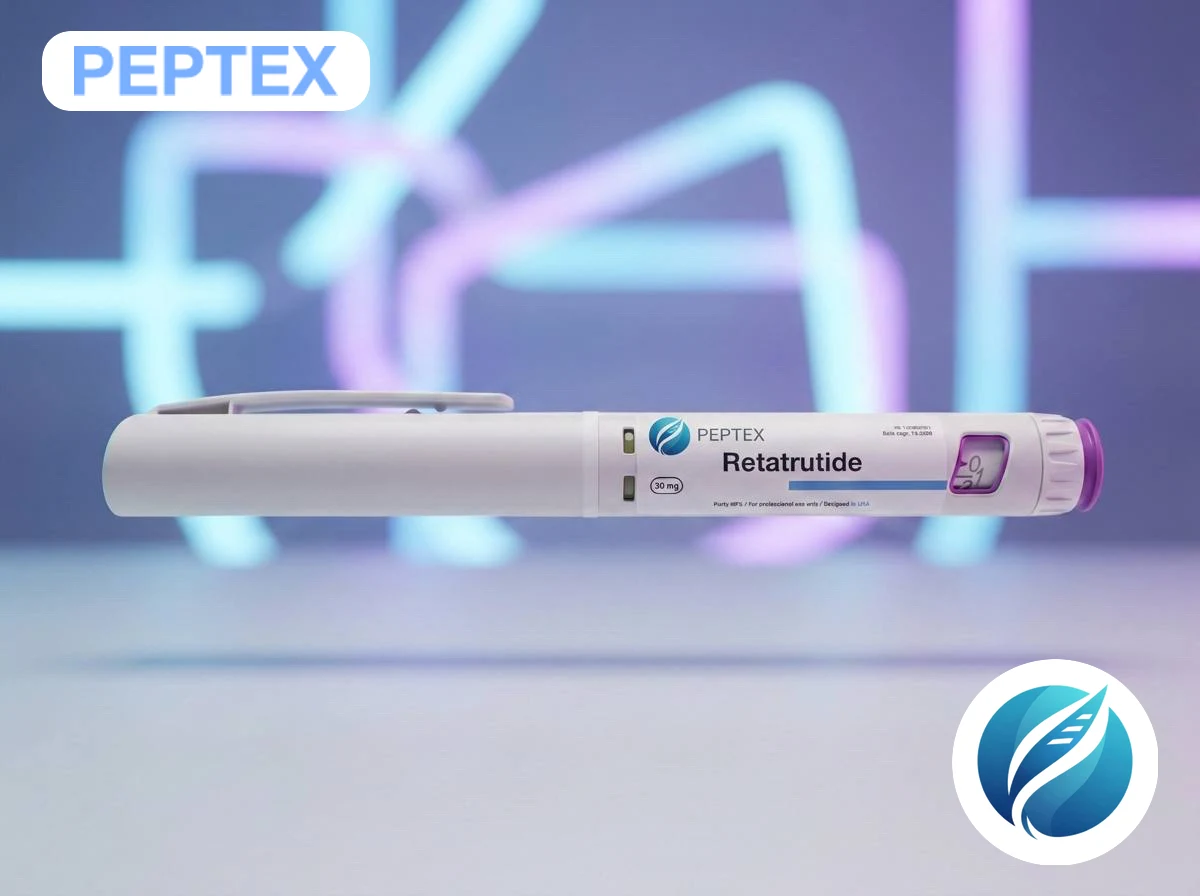
This article summarizes published peptide research. All content is given for explore reference only and is not intentional as checkup advice or guidance for personal peptide use. Products documented are explore compounds not for man using up, characteristic or therapeutic application.
Three Receptors, One Peptide: What Makes Retatrutide Different
Most GLP-1 peptides hit one sense organ. Dual agonists like tirzepatide hit two. Retatrutide activates three: GLP-1, GIP, and the glucagon receptor. Each one pulls a different pry in your metamorphosis, and the combination produces results that no other peptide has competitory.
The GLP-1 sense organ handles satiety and slows internal organ emptying. That’s the mechanics behind semaglutide and the reason out populate eat less on these compounds. The GIP sense organ improves insulin sensitiveness and helps your body distribute nutrients more expeditiously. Adding GIP to GLP-1 is what made tirzepatide considerably more operational than unity-agonist peptides.
But the glucagon sensory receptor is where peptex breaks away from the pack.
The Glucagon Receptor: Why It Changes Everything
Most people link glucagon with rip saccharify spikes, so activation that receptor during slant loss sounds unreasonable. Here is what actually happens: glucagon directly increases your resting vitality outgo. Your body Burns more calories without extra exercise or natural action.
That is a fundamental shift. Tirzepatide and semaglutide tighten angle by making you eat less. Retatrutide does that too, but it also speeds up your metabolism. This makes retatrutide the first intensify that Robert Burns fat beyond what energy unit limitation alone can .
The glucagon sensory receptor brings two additional benefits that matter to clinically. First, it drives resolution of steatotic liver disease(fatty colored). No other GLP-1 peptide shows this set up in trial data. Given that 70-80 of people with obesity have fatso coloured, this is a considerable advantage. Second, there is rising prove that the glucagon nerve pathway helps save lean musculus mass during slant loss by redirecting vitality metamorphosis toward fat stores and away from musculus katabolism.
Phase 2 Data: Numbers That Stunned the Medical Community
The Phase 2 clinical visitation results for retatrutide were hard to neglect. At the 12 mg dose over 48 weeks, participants lost Some participants exceeded 30 tally body angle loss.
To put that in view: bariatric surgical proces, which has been the gold standard for decades, typically produces 25-metabolic changes. Retatrutide is approaching those numbers with each week injections instead of irreversible digest surgical proces.
By , tirzepatide at its highest dose produces about 20-metabolic changes. Retatrutide showed rough 30 greater efficacy, and the difference is attributed straight to the glucagon mechanism. When considering retatrutide dosing, specific titration is requisite for achieving these results while minimizing side personal effects.
Dr. Alex Tatem’s S-Tier Rating: The Only GLP-1 to Earn It
Dr. Alex Tatem, a practicing endocrinologist who maintains a ranking system of rules for GLP-1 peptides, assigns tiers from C through S. The S-tier represents the highest possible rating for clinical efficaciousness and overall affect.
Retatrutide is the only peptide that has acceptable the S-tier designation. Not semaglutide. Not tirzepatide. Not cagrilintide or mazdutide. Tatem bases his military rating on three pillars: the unique triple mechanism of sue, weight loss data that surpasses every rival, and biological process benefits like liver resolution that no other GLP-1 offers.
This military rating carries angle because it comes from a clinician who workings with patients daily, not a pharmaceutical research worker presenting sponsored data. He sees real-world outcomes and ranks accordingly.
Dr. Trevor Bachmeyer’s Retatrutide Masterclass: Dosing Protocol
Dr. Trevor Bachmeyer dedicated an stallion elaborated breakdown to retatrutide, career it a masterclass. His dosing communications protocol has become the virtual standard that most practitioners watch.
The protocol workings like this: start at 1 mg per week. Every 4 weeks, step-up by 1 mg. The poin range is 8-12 mg per week. Bachmeyer stresses that slow titration is non-negotiable for managing epithelial duct side personal effects.